Ekoplaza and Marqt will be the first supermarket chain to actually collect deposit cans through their stores
Supermarket chains Ekoplaza and Marqt have announced that they would prefer to start collecting small plastic bottles and cans with a deposit in all their stores sooner rather than later. This is in contrast to the other supermarkets (united under the Central Bureau for Food Trade (CBL) and the Waste Fund) which refuse to collect cans and are advocating [...]
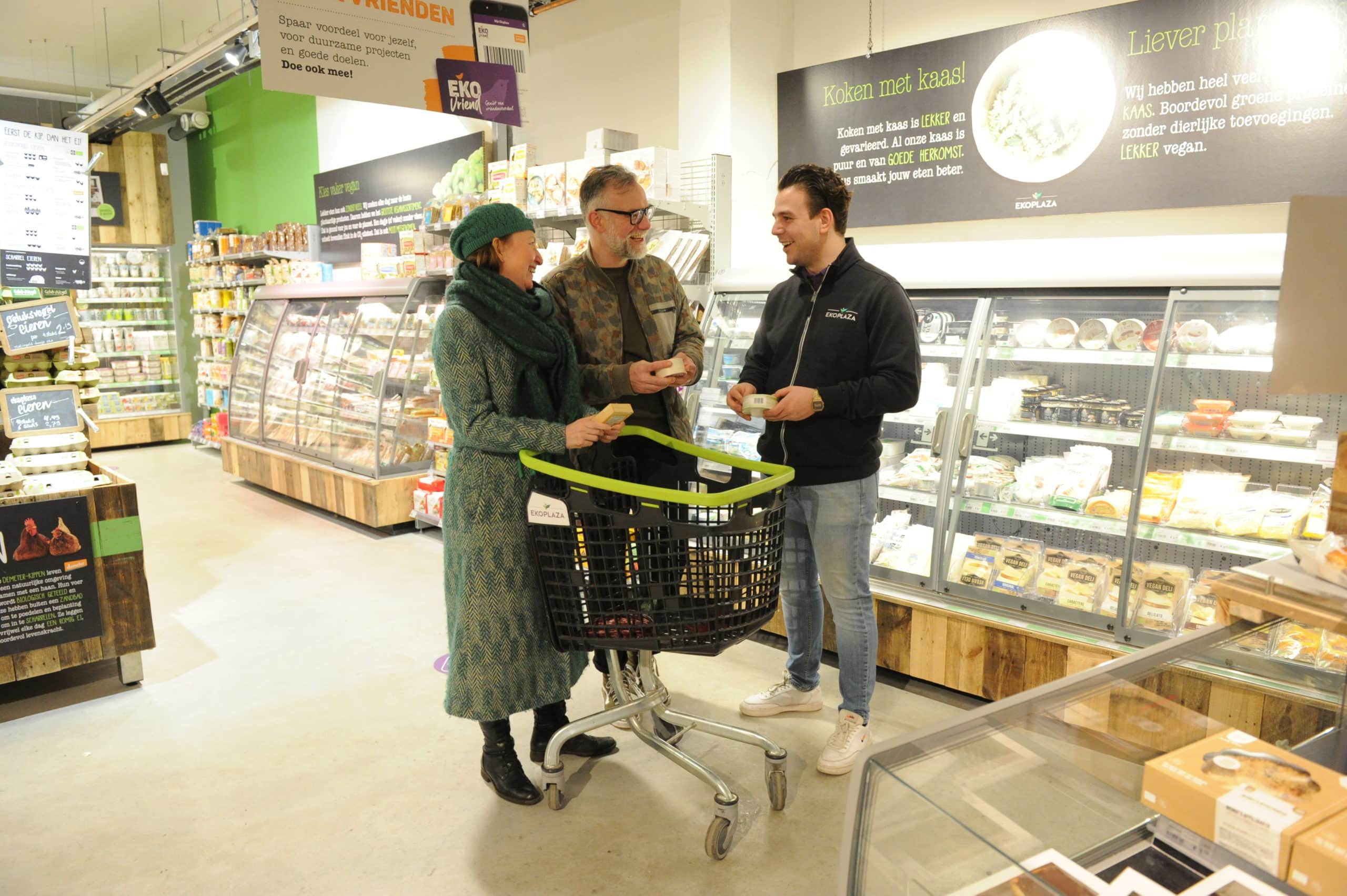
Supermarket chains Ekoplaza and Marqt announce that they would rather start collecting small deposit-bearing bottles and cans in all their stores yesterday than today. This is in contrast to the other supermarkets (united in the Central Bureau for Food Trade (CBL) and the Waste Fund) which refuse to collect cans and advocate placing unmanned deposit machines in public spaces. Ekoplaza and Marqt are the first supermarket chains to openly speak out against the Waste Fund's proposal.
Quality Manager of Ekoplaza, Steven IJzerman: “We have been advocates for deposits on plastic and cans for years. As far as we are concerned, deposits should have been introduced on these beverage containers years ago. Just like in Denmark and Germany. The recent study by Eunomia shows that without in-store return, deposits do not work as well and this strengthens us in our decision.“
State Secretary Stientje van Veldhoven decided on 3 February 2021 that, starting on 31 December this year, there will be a €0.15 deposit on all beverage cans, just as on small plastic bottles.
Steven IJzerman: “With this, the State Secretary has given all supermarkets two years to free up space in their warehouses and organise their operations in such a way that they are able to facilitate climate-positive behaviour for customers. And that is crucial because an increasing number of studies show that people place great value on a healthy environment, nature, and sustainability. For us as a supermarket, we believe it is important to respond to that positive attitude which many people have and to support them in everything they want and can do themselves. After all, as a supermarket chain, we inherently have a connecting role between soil and plate, or in other words, between producer and consumer. And that role offers opportunities, but more than that, a social obligation. With profit maximisation alone, we will not manage as a society and certainly not as an ecological system. With this in mind, years ago we set up the deposit machines of Ekoplaza and Marqt in such a way that customers can choose to receive the deposit refund themselves or donate it to the Plastic Soup Foundation.”
Return-to-retail most consumer-friendly and most effective
Recent research by Eunomia underscores that collection via the supermarket, the so-called return-to-retail, is the most consumer-friendly and thereby forms a major factor in the success of deposit schemes. This is also where the preference of the Dutch consumer lies. 89% of consumers find it very important to important to be able to return deposit bottles and cans to the points of sale, according to the survey by the Consumentenbond (Dutch Consumers' Association).
Suze Govers of Recycling Network Benelux: “For years, deposit schemes have proven to be an excellent tool for keeping beverage containers out of the environment. The condition is, however, that the system is customer-friendly. An inconvenient system for cans, as the Waste Fund is now advocating, will cause the participation rate to drop, resulting in fewer cans being collected, which is obviously bad for the environment. Behaviour with which consumers have been familiar for years must therefore be central to the design of the deposit system. Customers must be able to return their deposit cans to the same place as their deposit bottles: in the supermarket and large retail outlets”.
The Consumentenbond also emphasised last week that it is of great importance that consumer confidence in the current deposit system is not harmed by hastily setting up a flawed new and parallel collection system alongside the existing and well-functioning collection system with deposit machines in supermarkets.
Growing resistance to Waste Fund plan
The House of Representatives has asked the Waste Fund to come and give an explanation during a technical briefing and a roundtable discussion with stakeholders in the Circular Economy committee on Thursday 10 March. Important stakeholders such as the Association of Netherlands Municipalities (VNG) oppose the on-street collection points. There is growing resistance to the Waste Fund's plan.
Ekoplaza’s dilemma
Ekoplaza’s quality manager IJzerman hopes that other supermarkets will soon cease their resistance to in-store collection. “Combatting litter from cans and plastic only has a chance of succeeding if we as an industry take on our role together. Even if we at Ekoplaza and Marqt would rather start collecting cans yesterday than today, it is simply economically unviable if we are the only supermarket chain taking responsibility for this part of the Dutch waste and environmental issue. In addition, it is simply pleasant for consumers that store staff can step in immediately if something goes wrong with the deposit machine, but how do you solve that at unmanned points? We hope that our visi
Supermarket chains Ekoplaza and Marqt announce that they would rather start collecting small deposit-bearing bottles and cans in all their stores yesterday than today. This is in contrast to the other supermarkets (united in the Central Bureau for Food Trade (CBL) and the Waste Fund) which refuse to collect cans and advocate placing unmanned deposit machines in public spaces. Ekoplaza and Marqt are the first supermarket chains to openly speak out against the Waste Fund's proposal.
Quality Manager of Ekoplaza, Steven IJzerman: “We have been advocates for deposits on plastic and cans for years. As far as we are concerned, deposits should have been introduced on these beverage containers years ago. Just like in Denmark and Germany. The recent study by Eunomia shows that without in-store return, deposits do not work as well and this strengthens us in our decision.“
State Secretary Stientje van Veldhoven decided on 3 February 2021 that, starting on 31 December this year, there will be a €0.15 deposit on all beverage cans, just as on small plastic bottles.
Steven IJzerman: “With this, the State Secretary has given all supermarkets two years to free up space in their warehouses and organise their operations in such a way that they are able to facilitate climate-positive behaviour for customers. And that is crucial because an increasing number of studies show that people place great value on a healthy environment, nature, and sustainability. We believe it is important to respond as a supermarket to that positive attitude that many people have and to support them in everything they want and can do themselves. After all, as a supermarket chain, we inherently have a connecting role between soil and plate, or in other words, between producer and consumer. And that role offers opportunities, but more than that, a social obligation. With profit maximisation alone, we will not manage as a society and certainly not as an ecological system. With this in mind, years ago we set up the deposit machines of Ekoplaza and Marqt in such a way tha
Return-to-retail most consumer-friendly and most effective
Recent research by Eunomia underscores that collection via the supermarket, the so-called return-to-retail, is the most consumer-friendly and thereby forms a major factor in the success of deposit schemes. This is also where the preference of the Dutch consumer lies. 89% of consumers find it very important to important to be able to return deposit bottles and cans to the points of sale, according to the survey by the Consumentenbond.
Suze Govers of Recycling Network Benelux: “For years, deposit schemes have proven to be an excellent tool for keeping beverage containers out of the environment. The condition is, however, that the system is customer-friendly. An inconvenient system for cans, as the Waste Fund is now advocating, will cause the participation rate to drop, resulting in fewer cans being collected, and that is obviously bad for the environment. Behaviour with which consumers have been familiar for years must therefore be central to the design of the deposit system. Customers must be able to return their deposit cans to the same place as their deposit bottles: in the supermarket and large retail outlets”.
The Consumentenbond also emphasised last week that it is of great importance that consumer confidence in the current deposit system is not harmed by hastily setting up a flawed new and parallel collection system alongside the existing and well-functioning collection system with deposit machines in supermarkets.
Growing resistance to Waste Fund plan
The House of Representatives has asked the Waste Fund to come and give an explanation during a technical briefing and a roundtable discussion with stakeholders in the Circular Economy committee on Thursday 10 March. Important stakeholders such as the Association of Netherlands Municipalities (VNG) oppose the on-street collection points. There is growing resistance to the Waste Fund's plan.
Ekoplaza’s dilemma
Ekoplaza’s quality manager IJzerman hopes that other supermarkets will soon cease their resistance to in-store collection. “Combatting litter from cans and plastic only has a chance of succeeding if we as an industry take on our role together. Even if we at Ekoplaza and Marqt would rather start collecting cans yesterday than today, it is simply economically unviable if we are the only supermarket chain taking responsibility for this part of the Dutch waste and environmental issue. In addition, it is simply pleasant for consumers that store staff can step in immediately if something goes wrong with the deposit machine, but how do you solve that at unmanned points? We hope that our vision inspires the other supermarkets to also take the step and participate in the deposit system by also accepting beverage cans in their stores.”
Note
If you have any questions for Ekoplaza, please contact Dorien van Schie on 06-113 16 714 or at dorien@nederlandsmedianetwerk.nl
If you have any questions for Recycling Network Benelux, please contact Tom Zoete on +32 497 04 27 96 or at admin@fairresourcefoundation.org
In the media
Radar. Supermarkets Ekoplaza and Marqt to collect cans starting next year
Volkskrant. Ekoplaza and Marqt to collect deposit cans, 7 March 2022
Distrifood. Deposit on cans: Ekoplaza and Marqt will collect them themselves
AfvalOnline. Ekoplaza and Marqt to collect deposit cans
FoodHolland News Ekoplaza and Marqt to collect deposit cans through their stores
Kassa. Deposit cans indeed returnable at Ekoplaza, 7 March 2022
Duurzaam Ondernemen. Ekoplaza and Marqt are the first supermarket chains to INDEED collect deposit cans through their stores, 7 March 2022
RD. Ekoplaza and Marqt to collect cans in all their branches
Ekoplaza. Ekoplaza does indeed collect deposit cans, 7 March 2022
Levensmiddelenkrant. Marqt and Ekoplaza advocate for can collection in stores, 7 March 2022
Retailtrends. Ekoplaza to take in deposit cans themselves, 7 March 2022
House of Representatives: In the spotlight: deposit on cans
This page is automatically translated. A human review will follow soon.



