Cans also contribute to the plastic soup
By dissolving the aluminium casing in hydrochloric acid, the hidden plastic layer is revealed. This is shown in the video and photos below. All tested cans, from brands most commonly found in litter in the Netherlands, turn out to contain such plastic on the inside. This plastic is used to prevent a reaction […]
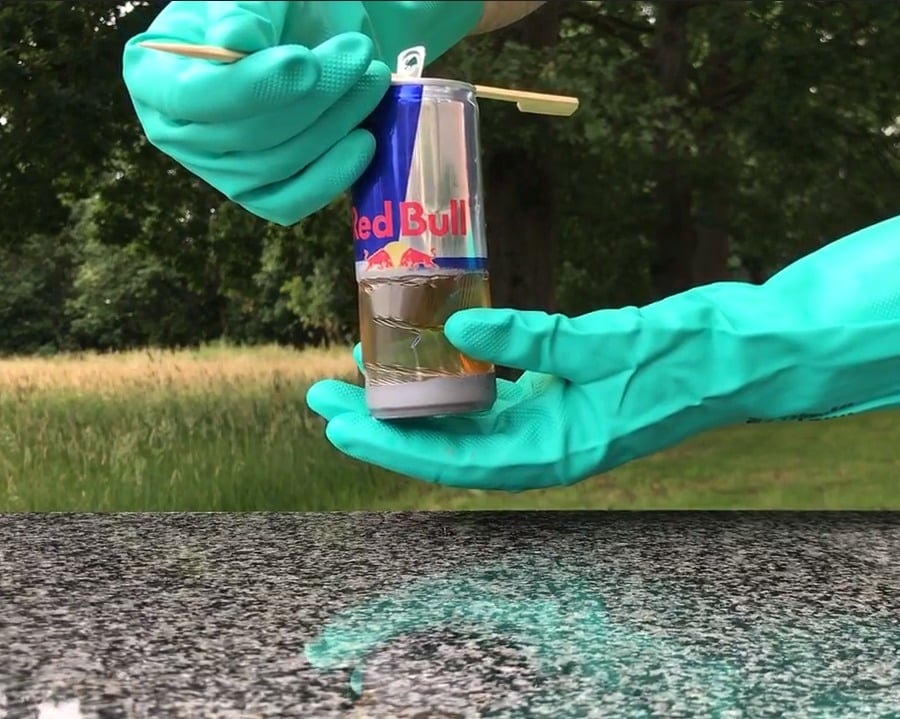

By dissolving the aluminium shell in hydrochloric acid, the hidden layer of plastic becomes visible. This is shown in the video below and in the photos. All tested cans, from brands that are found most frequently in litter in the Netherlands, turn out to contain such plastic on the inside. This plastic is used to prevent a reaction between the beverage and the aluminium or steel of the can.
In the Netherlands alone, 1.58 billion cans were sold in the past year. That is 13.3 per cent more than two years ago. The proportion of cans in litter is also growing: over the past year, the average number of littered cans rose from 22.5 to 24.3 per kilometre, according to measurements by Dirk Groot, who investigated littered beverage packaging over 1,000 kilometres in 43 different municipalities. During World Clean Up Day Netherlands 2018, cans were number two on the list of ten most frequently found items.
The presence of plastic in cans casts a new light on the environmental pollution caused by cans. State Secretary Stientje van Veldhoven, with her "focus on plastic", has so far kept cans out of the deposit legislation.
https://youtu.be/RtmMEKoczxA
Disclaimer: this is a dangerous experiment with corrosive substances that cause burns. This should only be carried out by adults who have knowledge of chemistry and are wearing protective clothing. The video may be used and shared on condition of mentioning Recycling Netwerk Benelux and a link to www.recyclingnetwerk.org.
State Secretary Van Veldhoven prioritises plastic pollution…
The State Secretary for Infrastructure and Water Management, Stientje van Veldhoven (D66), prioritises the battle against the plastic soup in her waste policy. "The relationship with our own health (...) makes the whole plastic soup a particular problem, which is why it really is my priority," said Van Veldhoven. She gives this as the reason for limiting the discussion about deposits to plastic bottles.
Despite repeated pressure from opposition parties and coalition partner ChristenUnie to also tackle cans, Van Veldhoven continues to exclude cans from the draft deposit regulations and has not yet presented an action plan to the House. "We all know that [cans] are a different issue than plastic bottles (...) Cans are part of a broader litter problem," Van Veldhoven declared.
Other coalition parties support her in this. CDA MP Agnes Mulder emphasises that the problem of plastic bottles is of a different order to that of cans. Jessica van Eijs (D66) said in the House of Representatives: "Ultimately, I think we really need to tackle plastic first. (...) Plastic is a different kind of problem, and also a more urgent one than cans."
… which cans are now clearly shown to contribute to
But now it turns out that cans also contain plastic. 1.58 billion cans sold therefore equate to 1.58 billion layers of plastic. Cans end up in large numbers in litter, thus contributing to plastic pollution. Over time, the plastic layer will break down into microplastics.
"If the State Secretary is serious and follows her own line of reasoning, then she must also tackle cans in the deposit scheme. Otherwise, this remains a blind spot in the fight against the plastic soup," says environmental organisation Recycling Netwerk.
Cans are already a major litter problem anyway
Cans account for 62.7 per cent of the beverage containers in litter. Not only do they frequently end up in litter, but cans also cause unnecessary animal suffering. If they are mown along with the grass, sharp pieces of can end up in the cattle feed, making cows sick, not infrequently with fatal consequences. The public support for deposits on cans is huge and is still growing.
"This alone should be sufficient reason for the State Secretary to address this. Now that plastic has also been shown to be in cans, including that type of beverage packaging in the deposit scheme is a must within her own argumentation against plastic soup," says Recycling Netwerk.
The environmental pollution caused by cans also risks becoming even greater due to the State Secretary's selective choice to only provide a deposit on plastic bottles. It is expected that beverage producers will switch from plastic bottles to cans. The first bottle-shaped cans have already been spotted on the market.
"Given the presence of plastic in cans, this would therefore be a switch from packaging that consists of plastic to packaging that contains plastic. Only by also including cans in the deposit regulations can this perverse consequence be easily avoided," concludes environmental organisation Recycling Netwerk.
Related articles
AD, There is also plastic in drink cans, 1 June 2019
RTL Nieuws, ‘Charge a deposit on drink ca
By dissolving the aluminium shell in hydrochloric acid, the hidden layer of plastic becomes visible. This is shown in the video below and in the photos. All tested cans, from brands that are found most frequently in litter in the Netherlands, turn out to contain such plastic on the inside. This plastic is used to prevent a reaction between the beverage and the aluminium or steel of the can.
In the Netherlands alone, 1.58 billion cans were sold in the past year. That is 13.3 per cent more than two years ago. The proportion of cans in litter is also growing: over the past year, the average number of littered cans rose from 22.5 to 24.3 per kilometre, according to measurements by Dirk Groot, who investigated littered beverage packaging over 1,000 kilometres in 43 different municipalities. During World Clean Up Day Netherlands 2018, cans were number two on the list of ten most frequently found items.
The presence of plastic in cans casts a new light on the environmental pollution caused by cans. State Secretary Stientje van Veldhoven, with her "focus on plastic", has so far kept cans out of the deposit legislation.
Disclaimer: this is a dangerous experiment with corrosive substances that cause burns. This should only be carried out by adults who have knowledge of chemistry and are wearing protective clothing. The video may be used and shared on condition of mentioning Recycling Netwerk Benelux and a link to www.recyclingnetwerk.org.
State Secretary Van Veldhoven prioritises plastic pollution…
The State Secretary for Infrastructure and Water Management, Stientje van Veldhoven (D66), prioritises the battle against the plastic soup in her waste policy. "The relation with our own health (...) makes that entire plastic soup a special problem, which is why it really is my priority," said Van Veldhoven. She gives this as the reason for limiting the discussion about deposits to plastic bottles.
Despite repeated pressure from opposition parties and coalition partner ChristenUnie to also tackle cans, Van Veldhoven continues to exclude cans from the draft deposit regulations and has not yet presented an action plan to the House. "We all know that [cans] are a different issue than plastic bottles (...) Cans are part of a broader litter problem," Van Veldhoven declared.
Other coalition parties support her in this. CDA MP Agnes Mulder emphasises that the problem of plastic bottles is of a different order to that of cans. Jessica van Eijs (D66) said in the House of Representatives: "Ultimately, I think we really need to tackle plastic first. (...) Plastic is a different kind of problem, and also a more urgent one than cans."
… which cans are now clearly shown to contribute to
But now it turns out that cans also contain plastic. 1.58 billion cans sold therefore equate to 1.58 billion layers of plastic. Cans end up in large numbers in litter, thus contributing to plastic pollution. Over time, the plastic layer will break down into microplastics.
"If the State Secretary is serious and follows her own line of reasoning, then she must also tackle cans in the deposit scheme. Otherwise, this remains a blind spot in the fight against the plastic soup," says environmental organisation Recycling Netwerk.
Cans are already a major litter problem anyway
Cans account for 62.7 per cent of the beverage containers in litter. Not only do they frequently end up in litter, but cans also cause unnecessary animal suffering. If they are mown along with the grass, sharp pieces of can end up in the cattle feed, making cows sick, not infrequently with fatal consequences. The public support for deposits on cans is huge and is still growing.
"This alone should be sufficient reason for the State Secretary to address this. Now that plastic has also been shown to be in cans, including that type of beverage packaging in the deposit scheme is a must in her own argument against the plastic soup," says Recycling Netwerk.
The environmental pollution caused by cans also risks becoming even greater due to the State Secretary's selective choice to only provide a deposit on plastic bottles. It is expected that beverage producers will switch from plastic bottles to cans. The first bottle-shaped cans have already been spotted on the market.
"Given the presence of plastic in cans, this would therefore be a switch from packaging that consists of plastic to packaging that contains plastic. Only by also including cans in the deposit regulations can this perverse consequence be easily avoided," concludes environmental organisation Recycling Netwerk.
Related articles
AD, There is also plastic in drink cans, 1 June 2019
RTL Nieuws, 'Levy deposit on drink cans, they also contain plastic', 1 June 2019
De Telegraaf, 'Also deposit on cans', 1 June 2019
AfvalOnline, Recycling Netwerk advocates once again for deposit on cans, 1 June 2019
Radar, 'Drink cans with plastic must fall under the deposit scheme', 1 June 2019
Distrifood, New plea for deposit on cans, 1 June 2019
Het Parool, Environmental organisation: cans also contain plastic, 1 June 2019
Metronieuws, Also cans in the deposit scheme?, 1 June 2019
MarketingTribune, Plea for deposit on cans: there is plastic inside, 1 June 2019
This page is automatically translated. A human review will follow soon.



