Supermarkets to accept deposit cans after all, following a year of delaying tactics
“Together with other environmental organisations, right from the start we had no confidence in the plan of the Dutch Food Retail Association (CBL), the FNLI and the Waste Fund to collect cans in public spaces instead of in supermarkets. In all European countries, retailers simply take back the bottles and cans. […]”
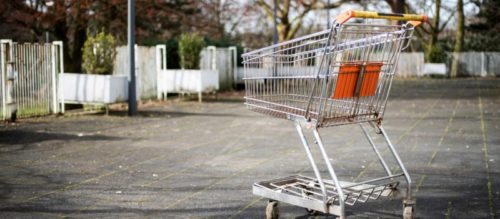

Supermarkets are going to take back deposit cans after all, after a year of delaying tactics
“Together with other environmental organisations, we had no confidence from the start in the plan of the Dutch Central Bureau for Food Trade (CBL), FNLI and Afvalfonds to collect cans not in supermarkets, but instead in public spaces. In all European countries, retail simply takes bottles and cans back. Only deposit systems with this 'return-to-retail' achieve return rates of 90 percent, and in the Netherlands, that is the minimum mandatory legal target. Collecting in supermarkets and other points of sale is the only right way. The more customer-friendly the deposit system, the better for the environment.” Ekoplaza & Marqt, which are not members of the CBL, already decided last Monday to simply start accepting deposit cans in their stores.
A year wasted
There are quite a few caveats to the process conducted by the CBL, FNLI and Afvalfonds Verpakkingen (Packaging Waste Fund). The Rutte III cabinet decided on 3 February 2021, over a year ago, that a deposit would be placed on cans on 31 December 2022. It was only in December 2021, more than 10 months after the cabinet decision, that Afvalfonds Verpakkingen published their plan. The plan stunned experts and stakeholders because the business community chose a convoluted, expensive and customer-unfriendly set-up that deviated significantly from standard deposit practice in other countries.
In recent months, much protest has been needed, from the Association of Dutch Municipalities VNG, the NVRD, environmental organisations, MPs, municipalities, the Consumers' Association and even supermarkets Ekoplaza and Marqt, to convince the business community to choose the most obvious and standard route of return in supermarkets.
Hearings and follow-up on the roll-out
Ultimately, the CBL's message comes just before the hearings this Thursday/tomorrow in the House of Representatives, where the business community must explain the proposal and MPs will engage with multiple stakeholders. This prospect, combined with the rising public backlash, now seems to have led to CBL's decision.
This does not alter the fact that the House of Representatives must be informed in more detail than just with a brief press release from the CBL, and that the stakeholders involved must be heard. The hearings must continue.
Meanwhile, 13 months have been wasted and less than 10 months remain to roll out the deposit cans return system in supermarkets. Both this tight timing and the previous course of the process have partially damaged the confidence of several stakeholders. All Dutch people will soon have to deal with deposits on cans. It is therefore important that all stakeholders can closely follow the roll-out of the new plan. The House of Representatives can ask the CBL to provide detailed information within two weeks on all details of the exact set-up, budgeting and timing of the roll-out. The House of Representatives can also demand a progress report at regular intervals.
In addition, the government must guarantee transparency on return rates and determine who will be responsible for achieving the legal target of 90% collection of cans by 2024.
Return obligation for large outlets and transparency in legislation
At the urging of the business community, the cabinet removed the return obligation for large outlets and supermarkets from the legislation. We warned from the very beginning and repeatedly that this could lead to problems. The events of recent months have painfully highlighted that gap in the deposit decree for both bottles and cans.
For plastic bottles, we find that a whole range of large retail outlets that are not supermarkets (such as cinema chain Pathé, theme parks, LaPlace, Hema, Axion) refuse to refund customers' deposits for empty plastic bottles, and it will be no different for cans.
In the case of cans, we find that the lack of a ret
“Together with other environmental organisations, we had no confidence from the start in the plan of the Dutch Central Bureau for Food Trade (CBL), FNLI and Afvalfonds to collect cans not in supermarkets, but instead in public spaces. In all European countries, retail simply takes bottles and cans back. Only deposit systems with this 'return-to-retail' achieve return rates of 90 percent, and in the Netherlands, that is the minimum mandatory legal target. Collecting in supermarkets and other points of sale is the only right way. The more customer-friendly the deposit system, the better for the environment.” Ekoplaza and Marqt, which are not members of the CBL, already decided last Monday to simply start accepting deposit cans in their stores.
A year wasted
There are quite a few caveats to the process conducted by the CBL, FNLI and Afvalfonds Verpakkingen. The Rutte III cabinet decided on 3 February 2021, over a year ago, that a deposit would be placed on cans on 31 December 2022. It was only in December 2021, more than 10 months after the cabinet decision, that Afvalfonds Verpakkingen published their plan. The plan stunned experts and stakeholders because the business community chose a convoluted, expensive and customer-unfriendly set-up that deviated significantly from standard deposit practice in other countries.
In recent months, much protest has been needed, from the Association of Dutch Municipalities VNG, the NVRD, environmental organisations, MPs, municipalities, the Consumers' Association and even supermarkets Ekoplaza and Marqt, to convince the business community to choose the most obvious and standard route of return in supermarkets.
Hearings and follow-up on the roll-out
Ultimately, the CBL's message comes just before the hearings this Thursday/tomorrow in the House of Representatives, where the business community must explain the proposal and MPs will engage with multiple stakeholders. This prospect, combined with the rising public backlash, now seems to have led to CBL's decision.
This does not alter the fact that the House of Representatives must be informed in more detail than just with a brief press release from the CBL and that the stakeholders involved must be heard. The hearings must continue.
Meanwhile, 13 months have been wasted and less than 10 months remain to roll out the deposit cans return system in supermarkets. Both this tight timing and the previous course of the process have partially damaged the confidence of several stakeholders. All Dutch people will soon have to deal with deposits on cans. It is therefore important that all stakeholders can closely follow the roll-out of the new plan. The House of Representatives can ask the CBL to provide detailed information within two weeks on all details of the exact set-up, budgeting and timing of the roll-out. The House of Representatives can also demand a progress report at regular intervals.
In addition, the government must guarantee transparency on return rates and determine who will be responsible for achieving the legal target of 90% collection of cans by 2024.
Return obligation for large outlets and transparency in legislation
At the urging of the business community, the cabinet removed the return obligation for large outlets and supermarkets from the legislation. We warned from the very beginning and repeatedly that this could lead to problems. The events of recent months have painfully highlighted that gap in the deposit decree for both bottles and cans.
For plastic bottles, we find that a whole range of large retail outlets that are not supermarkets (such as cinema chain Pathé, theme parks, LaPlace, Hema, Axion) refuse to refund customers' deposits for empty plastic bottles, and it will be no different for cans.
In the case of cans, we find that the lack of a return obligation for supermarkets led to a year of typical 'passive cooperation' by supermarkets and needlessly complicated plans, which were only replaced with a logical set-up for the deposit system after strong public protest.
Here, there is a role for the House of Representatives and the State Secretary for Infrastructure and Water Management Vivianne Heijnen: write the return obligation for retail outlets, including supermarkets, which was previously in the legislation, back in, without delaying the start date of deposits on cans as of 31 December 2022.
“We must keep in mind what the goal of all this is. Namely: that the Netherlands has a robust and customer-friendly deposit system by 31 December, so that cans no longer end up en masse in the environment. This is not just about the circular economy or the image of supermarkets. It is also about the living environment of all Dutch people,” concludes environmental organisation Recycling Netwerk Benelux.
In the media
Adformatie, Supermarkets will collect cans themselves after all, 9 March 2022
Trouw, Dutch supermarkets will collect cans themselves after all, 9 March 2022
Levensmiddelenkrant, Supermarkets will collect tin cans, 9 March 2022
Related tags
[IMAGE: https://fairresourcefoundation.org/wp-content/uploads/2022/03/Afbeelding-van-BRRT-via-Pixabay.avif]
[IMAGE: https://fairresourcefoundation.org/wp-content/uploads/2022/03/supermarket-credits-kai-oberhauser.avif]
[IMAGE: https://fairresourcefoundation.org/wp-content/uploads/2022/03/binnenhof-michael-fousert-.avif]
This page is automatically translated. A human review will follow soon.



