Customers are footing the bill for McDonald's pollution
For two years now, all catering establishments in the Netherlands have been required to serve food and drinks in reusable packaging for on-site consumption. Yet, since summer 2024, McDonald’s Netherlands has been breaking the law by offering single-use plastic-coated paper cups in its restaurants. This makes the country's largest fast-food chain not only non-compliant, wasting raw materials, but it even makes consumers pay extra for it by levying a surcharge on this disposable cup.
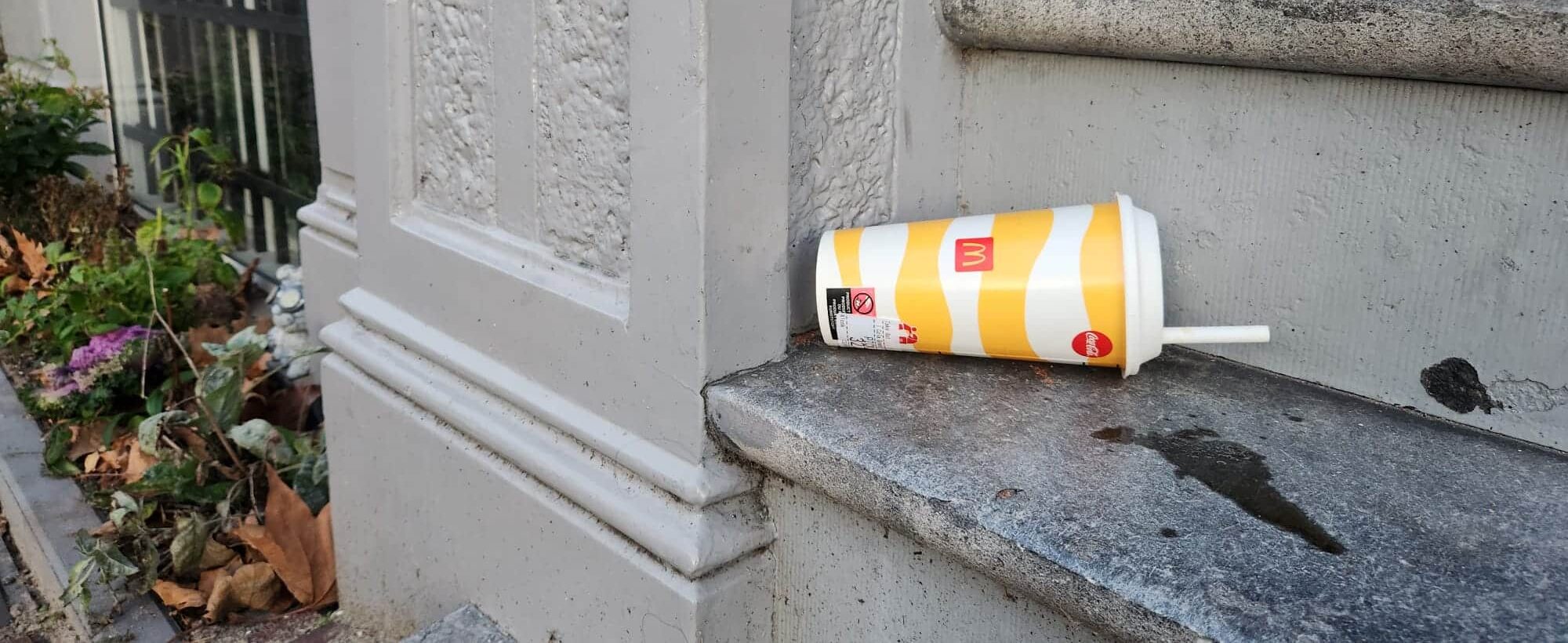


All cafés, restaurants and hotels serving food and drink for on-site consumption must offer this in reusable packaging[1]. This law has been in force in the Netherlands since January 2024, as an implementation of European regulations. The aim is to reduce the use of single-use packaging containing plastic. Since August 2024, McDonald’s has been breaking[2] this law by reintroducing single-use paper cups with a plastic coating for on-site consumption (for drinks and their McFlurry) alongside offering reusable packaging. Furthermore, the restaurants charge their customers €0.15 per single-use cup, while this "SUP surcharge" should only be charged for take-away packaging. The largest fast-food chain in the Netherlands therefore does not comply with the rules and moreover earns extra money from its customers by creating a business model around the prohibited single-use packaging.
Is market leader McDonald’s allowed to ignore the rules and make a profit from it too? Its competitors, both large chains and small businesses, who do work according to the rules and thus contribute to a circular packaging system, are faced with an uneven playing field. Fair Resource Foundation filed an enforcement request with the inspectorate on 26 November.
McDonald’s bypasses reuse…
In its Dutch Impact Report 2024–2025 (p. 15), published in October 2025, the chain writes that they believe “not in solely reusable packaging, but in a mix of solutions”.
This sounds nuanced, but behind the scenes, McDonald’s is actively lobbying against reusable packaging. In the European Union, the company does so through the much-criticised No Silver Bullet campaign, and in the Netherlands through talks with, among others, former State Secretary Chris Jansen, Special Government Representative for Circular Economy Steven van Eijck and various MPs. The company also influences public opinion by portraying reuse as “bad for the environment“ through interviews and sponsored articles in national and international media (2023, 2024, 2025). But perhaps more importantly: McDonald’s Netherlands is letting its own reuse system fail.
The impact report states that their reusable cups are reused only 3.3 times in Dutch restaurants. A figure that is much lower than that of well-designed, effective reuse systems. Their French colleagues show that it can be done better, with an average of 33.9 times reused for on-site consumption.
Impact Report McDonald’s Netherlands 2024-2025 (p. 15)
The fact that reuse in Dutch restaurants is not working is not surprising:
Unclear ordering process: For dine-in, you can choose a single-use cup next to a reusable cup, which then says "to take away" (photo 4);
The top (first) options in the menu on the ordering kiosk are the single-use cups;
There is no deposit on reusable cups for dine-in, meaning that customers who want to finish their drinks later take the cup outside and do not return it, or accidentally throw it in the bin. There is therefore no incentive to return reusable packaging for on-site consumption (photo 1, see also research by the Zwerfinator);
For some of the reusable cups for dine-in, there is no information in the ordering process: it is therefore not clear what kind of cup you will receive your order in (and what you should do with it). For example: Coca Cola Regular says 'reusable cup' and Coca Cola Zero has no information (even though it is also served in a reusable cup). Note: This does not apply to all checked restaurants (photo 5);
Reusable and single-use cups look very similar (photo 1), while the return process is different; Single-use cup: in the bin;
Reusable for dine-in: back to the collection station;
Reusable for take-away: must be returned (unclear where) to get the deposit back;
Branded cups that can be seen as collector's items (photo 1);
Identical single-use paper lid on all cups (single-use AND reusable) (photo 2);
No communication in the restaurants about the benefits of reuse: hardly any action is taken to encourage customers to choose the reusable version;
For McFlurry, when we ordered both a single-use and a reusable packaging, we were only served single-use packaging (photo 3).
Specifically regarding reusable packaging for take-away: there is lack of clarity on how and where consumers can return their packaging, for example whether they get their deposit back; and whether they have to queue up again amongst other customers to do so (photo 6).
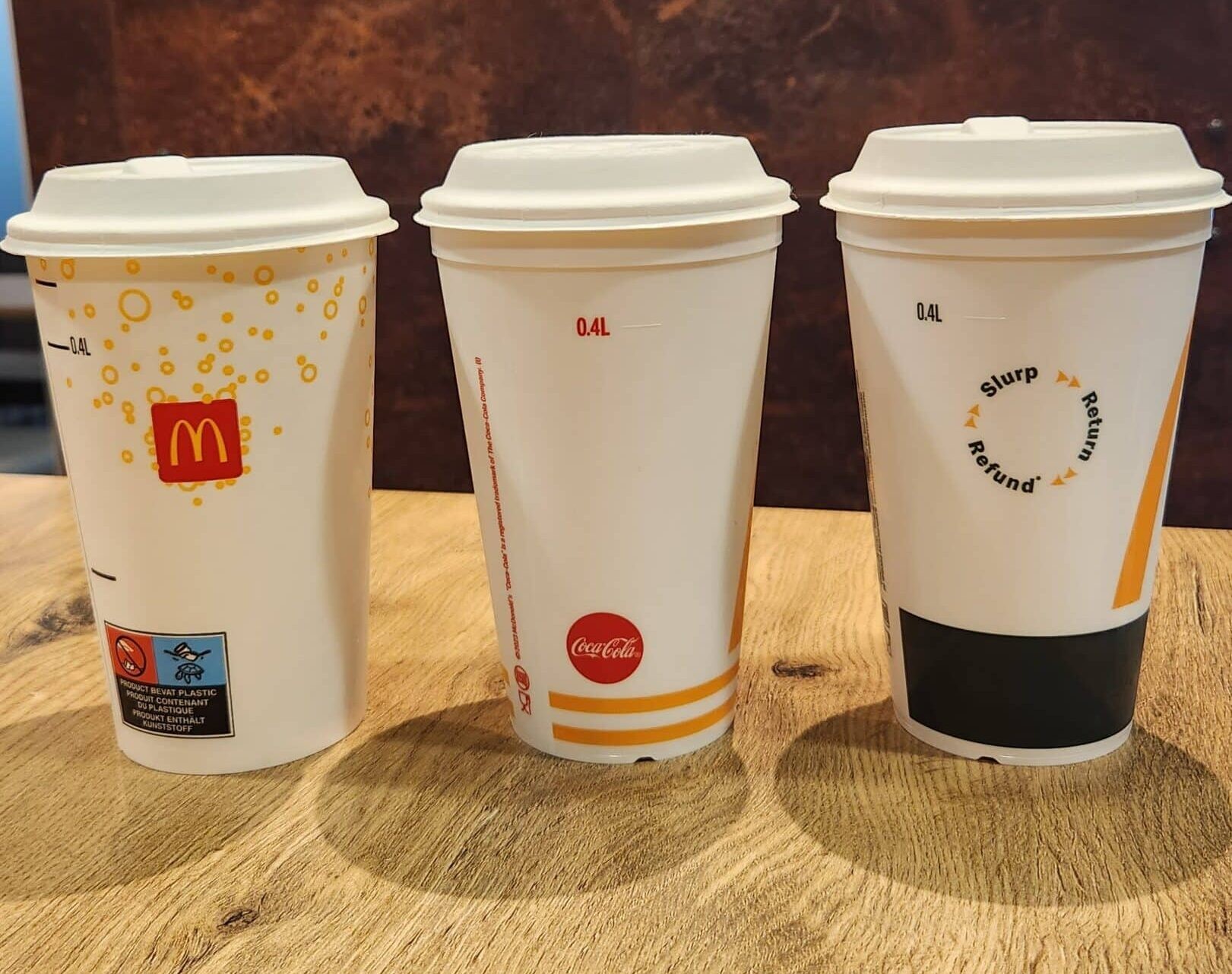 Photo 1 – Medium-sized cups. From left to right: for single-use in the restaurant, reusable in the restaurant, reusable for take-away. |  Photo 2 – Single-use cardboard lid on single-use (top) and reusable (bottom) packaging for on-site consumption. |
|---|---|
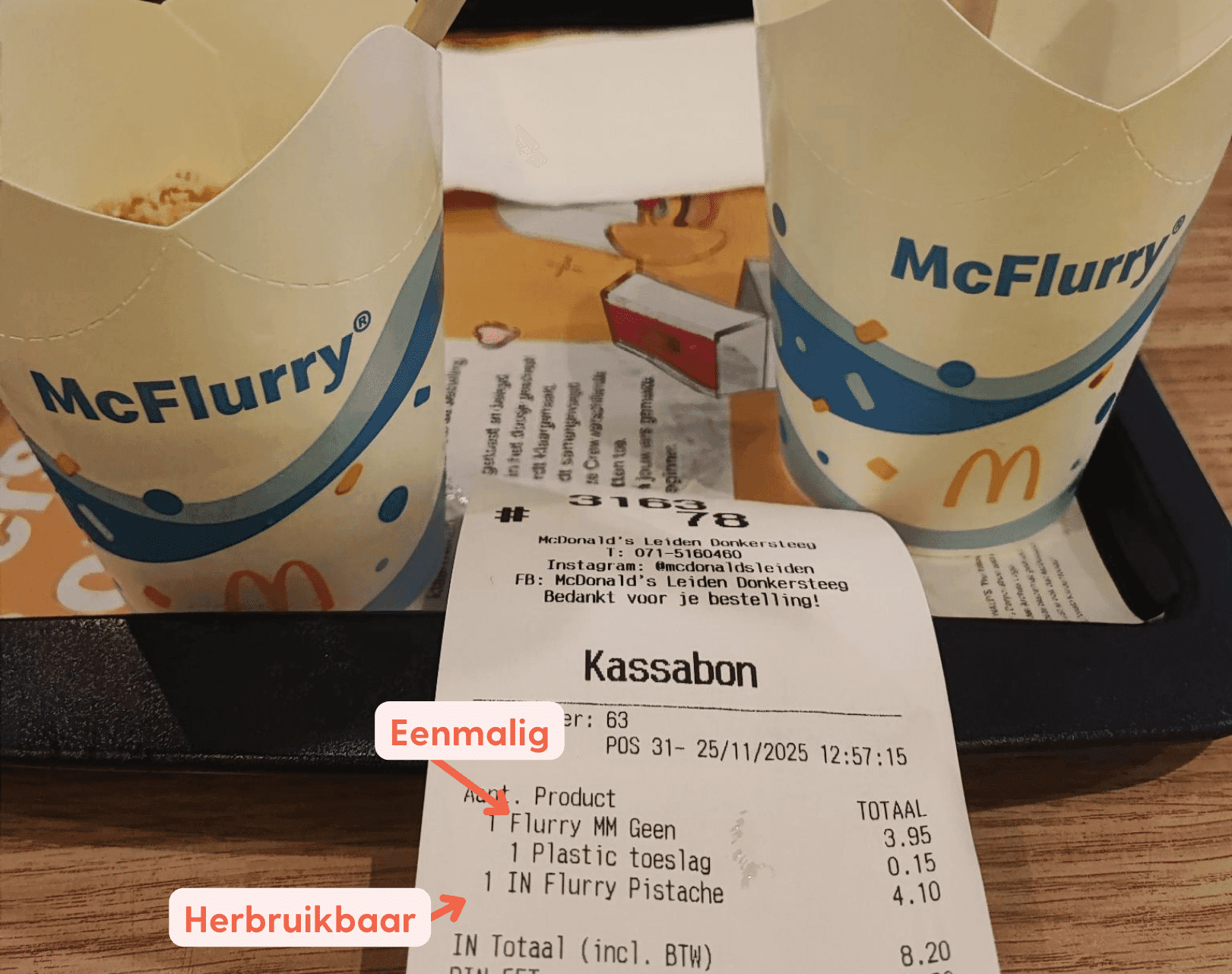 Photo 3 – Order of two McFlurrys, one in single-use packaging and one in reusable packaging. Both served in single-use packaging | 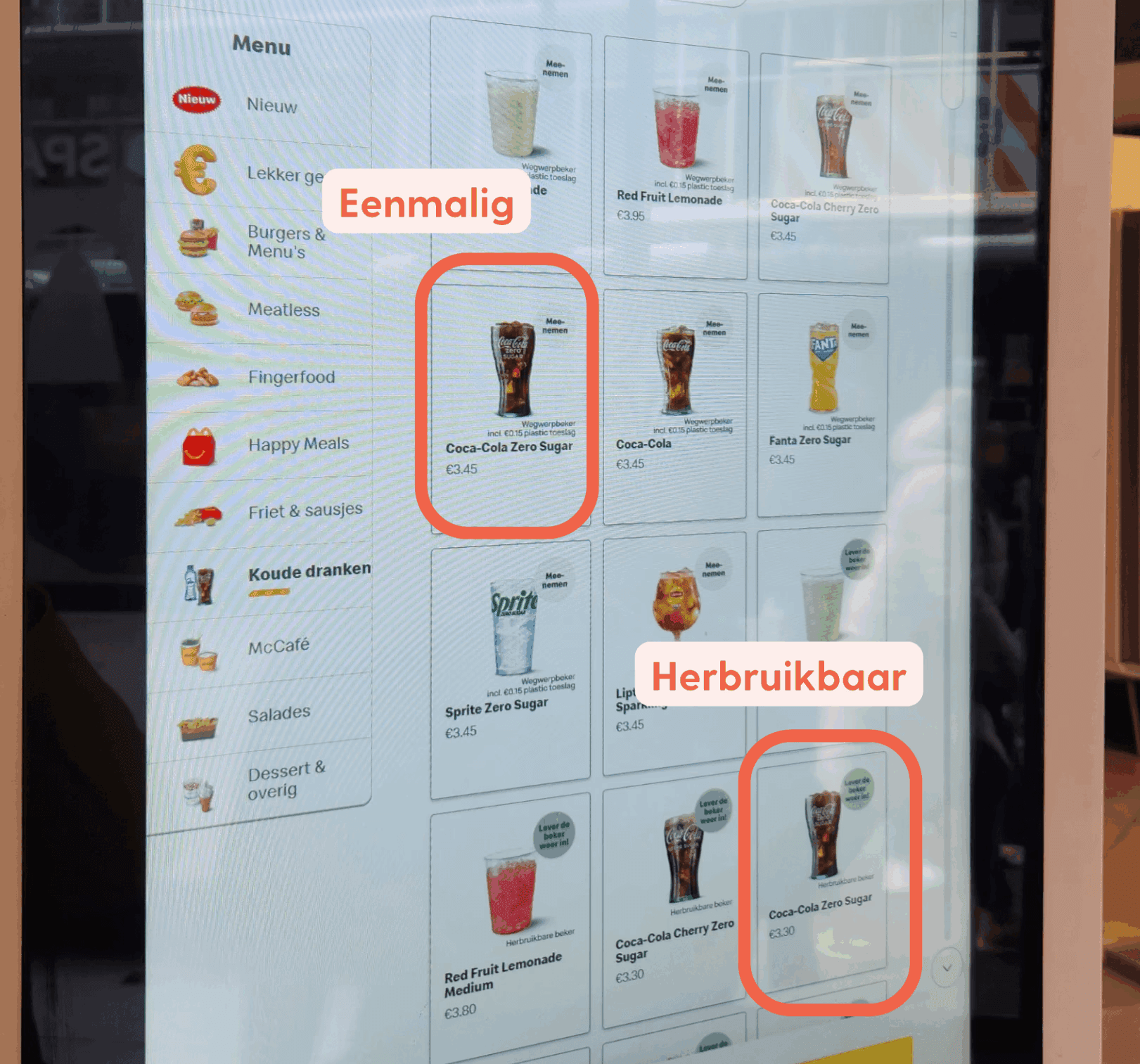 Photo 4 – Dine-in ordering process: each drink was shown twice in single-use packaging (1st option) or reusable packaging (2nd option) |
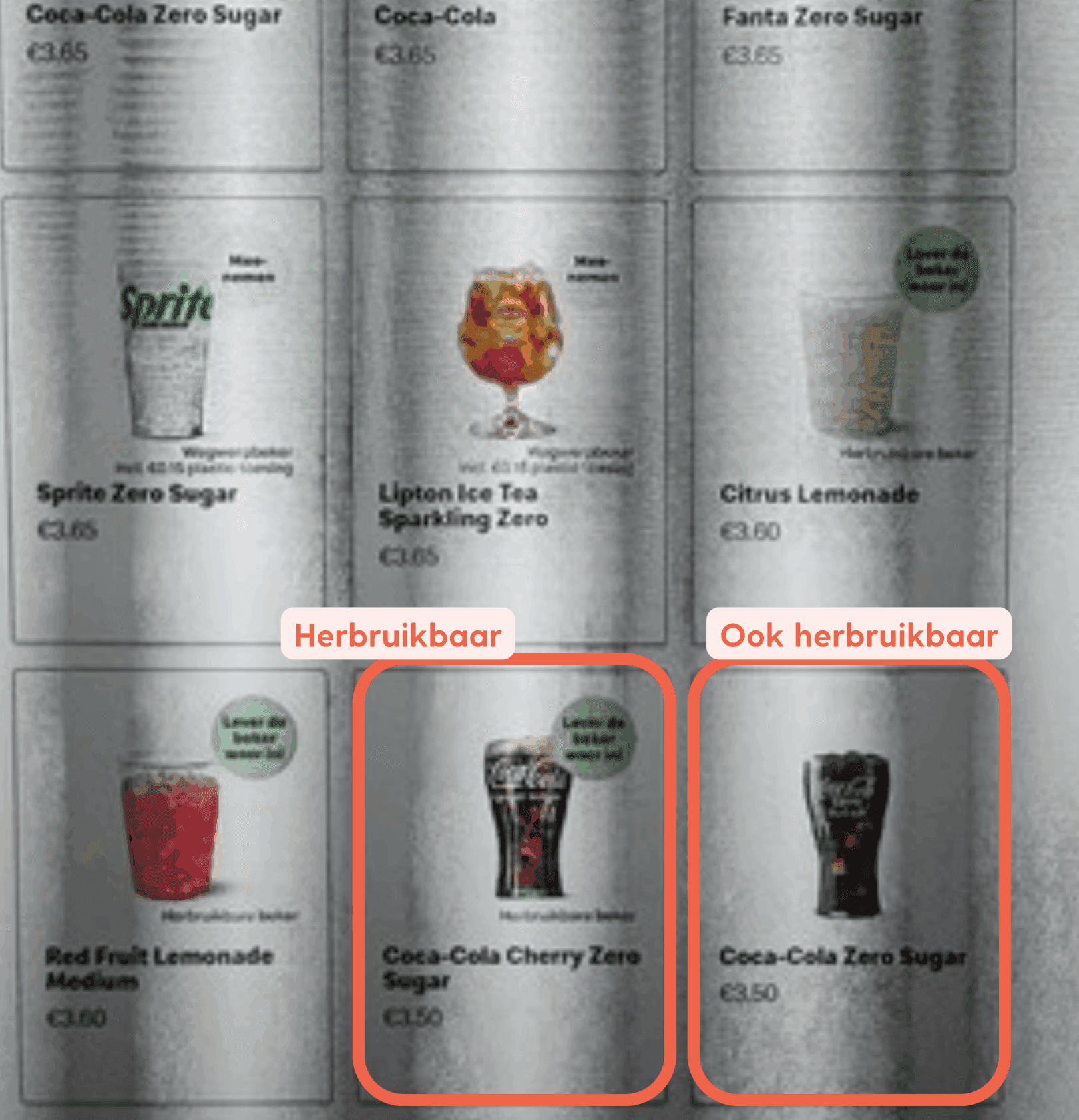 Photo 5 – Dine-in ordering process for some restaurants: no mention at all on reusable packaging | 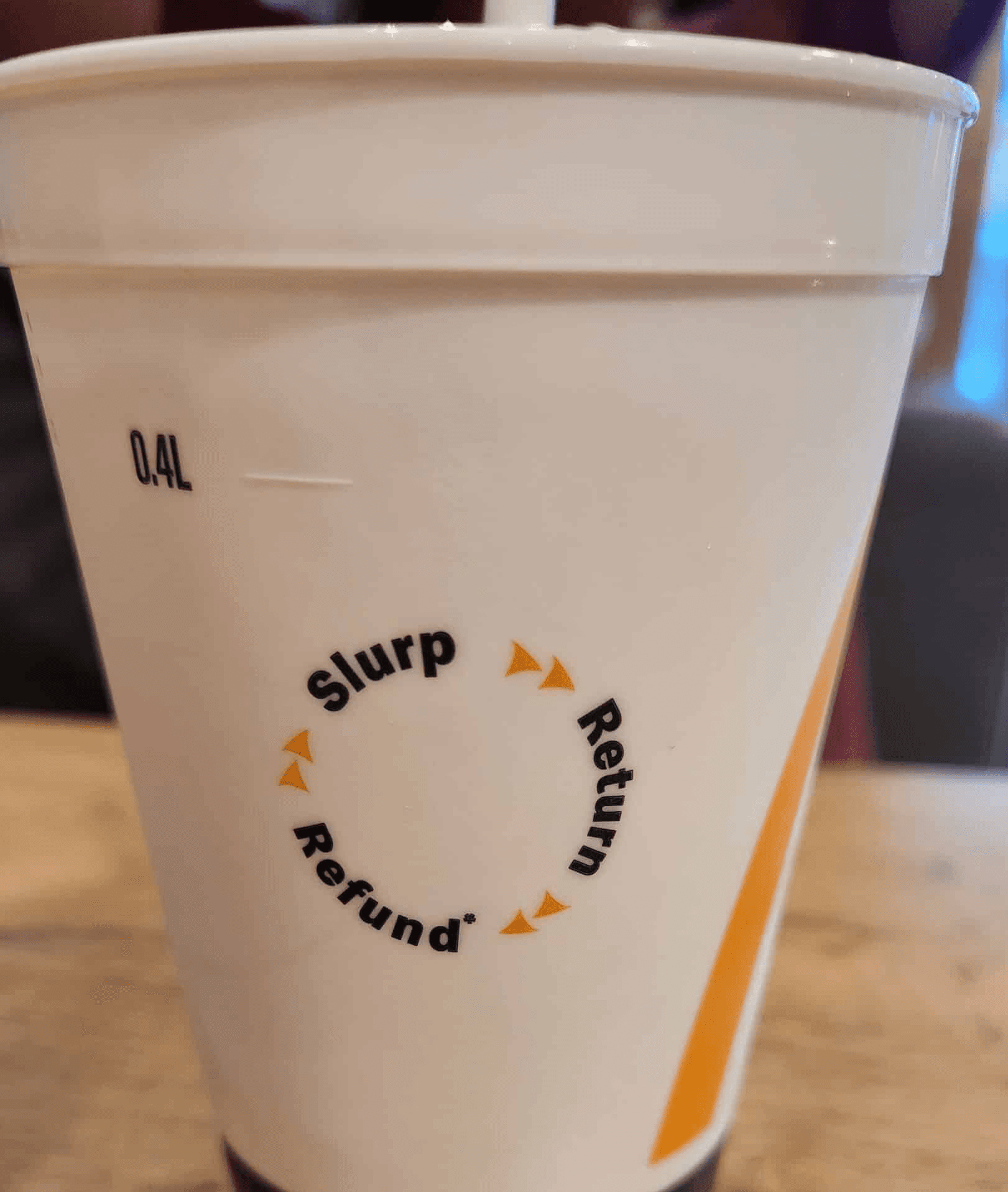 Photo 6 – Communication on reusable packaging for take-away |
 Photo 7 – Return station for reusable cups with space to empty liquids |
These are all features that do not align with the Reuse Roadmap developed by Mission Reuse on behalf of the Ministry of Infrastructure and Water Management. Although certain parts of the system are well thought out by McDonald’s (at the cash register there is quick refund of deposits and there are reasonably clear return stations), this is insufficient to achieve the desired return rates. Yet McDonald’s actively communicates that reuse does not work. But a flawed system cannot be used to assess the environmental and economic performance of reuse.
Incorrect assumptions and unfounded claims: the truth about single-use paper packaging
Meanwhile, McDonald’s continues to mislead consumers about how "green" their paper packaging is compared to reusable alternatives. However, replacing single-use or reusable plastic with single-use paper (with a plastic coating) ignores the massive problems arising from the growing demand for paper. Annually, 3 billion trees are cut down, forests in Estonia and Finland have become net CO₂ emitters, and forest fires and biodiversity loss are increasing (Environmental Paper Network).
And that's not to mention transport, energy, and water consumption: studies show that the endless cycle of resource extraction, manufacturing, using, and processing single-use packaging has a larger environmental impact than reuse in well-designed systems (Rethink Plastic Alliance, 2021; Eunomia, 2023).
Breaking the rules and stifling the reuse industry
For a year and a half, McDonald’s Netherlands has been selling drinks for on-site consumption in single-use packaging containing plastic, against the law. The fast-food giant, larger than KFC and Burger King combined (the latter demonstrates that reuse does work through consumer-friendly systems), therefore does not comply with the Dutch single-use plastic regulations. That is why Fair Resource Foundation has submitted an enforcement request to the Human Environment and Transport Inspectorate (ILT).
Additionally, by deliberately designing a flawed reuse system and subsequently blaming reuse as a concept, the chain is threatening the emergence of the Dutch circular industry. McDonald’s is taking the wind out of the sails of forward-thinking, innovative Dutch reuse entrepreneurs who are working towards a cleaner world with lower costs for society.
Reuse is the future, and the future is now
The Dutch government did not establish reuse as the standard for no reason: it wants 40% fewer single-use cups and food containers with plastic by 2026 and an end to litter. This can only be achieved by completely phasing out packaging containing plastic or by introducing reuse systems. McDonald’s itself advocates for “an approach based on real-world data about the actual environmental impact of reusable packaging“ (Impact Report 2024–2025, p. 15).
The results are clear: optimised reuse systems perform better than single-use packaging, in terms of both environmental impact and cost efficiency. Mandatory reuse is therefore an effective, data-driven solution to the throwaway society we have collectively created. Burger King, McDonald’s biggest competitor, shows that reuse does work through consumer-friendly systems, including in the fast-food sector. In other sectors, many good examples can also be found both domestically and abroad. Think of theme parks (Disneyland Paris, Walibi, Diergaarde Blijdorp, Toverland), sports clubs (v.v. Oudehaske, v.v. Oegstgeest), and city-wide events (Leids Ontzet, Gentse Feesten).
McDonald’s and government: time to act for real circularity
McDonald’s Netherlands has made it clear that they are “not happy” with the new rules for reusable packaging, preferring paper packaging with a plastic coating. By lobbying on legislation, steering public opinion, and letting its own reuse system in the Netherlands fail, McDonald’s is trying to get its way. In its quest to maintain the status quo of single-use packaging, the company does not even hesitate to break the law and make extra money from their customers.
We call on Thierry Aartsen, State Secretary for Infrastructure and Water Management, to ensure clear, uniform legislation for all sectors, and enforcement. This is how the transition from single-use to reuse can actually be made. As the State Secretary himself indicated during the last committee debate on the Circular Economy: “it would be a shame” to go back to “the paper cups”. Right now, it is essential not to roll back the existing reuse legislation, but to strengthen it (see our previous suggestions for this).
Companies that “have invested and want to move forward”, as Aartsen called them, need clear, consistent rules in order to build well-functioning reuse systems. Furthermore, enforcement is indispensable, and it can make a big difference when the most influential fast-food company, which is breaking the law, is held accountable.
Finally, we call on McDonald’s to take their responsibility and respect the law, to stop dragging their feet, and to stop making customers pay for prohibited single-use packaging. As the market leader, McDonald’s sets the direction of the market. The company is keen to use its “scale to make a positive impact”. We can only applaud that, on the road to reusable packaging.
Footnotes
[1] Unless high-quality recycled rPET is used and recycled again (think of soft cups at festivals).
[2] We visited the following 12 restaurants to investigate the reuse system: Arnhem Station, Beestenmarkt (Leiden), Coolsingel (Rotterdam), Donkersteeg (Leiden), Hazeldonk-Oost (Hazeldonk), Hoogstraat (Rotterdam), Lange Vie (Utrecht), Oudegracht (Utrecht), Persant Snoepweg (Leiderdorp), Rhijnhofweg (Oegstgeest), Rooseveltstraat (Leiden), Turfmarkt 95 (The Hague)