Plastic Table presents wish list, structural change is yet to come
After a successful lobby by the plastics industry, Sophie Hermans abolished both the plastics standard and the plastics levy. This will lead to an increase in the costs of waste incineration, resulting in a substantial extra tax for households of 40 euros on average. A ‘Plastics Table’ led by Steven van Eijck was allowed to come up with alternative plans, but it remains uncertain how a new government will tackle this.


The disastrous consequences of the production, use, and disposal phase of fossil plastic are becoming clearer by the day. Throughout the entire chain, plastic has a negative impact on our health and the health of our living environment. The Netherlands seemingly has grand ambitions for the circular economy, but so far does not dare to take decisive action on plastic.
Cabinet scraps plastic policy
Indeed, in April 2025, the Cabinet announced that it was scrapping the intended plastic standard and plastic tax. With the plastic standard, processors of plastic pellets would be obliged to blend in recycled pellets when making plastic packaging or another plastic product from them, for example. The plastic tax would be a tax on processing or producing fossil plastic pellets, which would make the use of fossil plastic somewhat less attractive than recycled or bio-based plastic. According to the plastic industry in the Netherlands, however, this would lead to unfair competition with plastic from abroad. This is because the standard and the tax only relate to what is produced in the Netherlands, and not to what is placed on the market in the Netherlands. A plastic bucket from Germany could then be produced cheaper and still be sold in the Netherlands. On the other hand, these measures would help to stimulate the use of recyclate, which is important given the many bankruptcies in the plastic recycling industry and the commitment to a circular economy.
Origin of the Circular Plastic Table
At the end of 2024, the initiative to set up a Circular Plastic Table came from the industry.
The goal of the table was to arrive at an alternative to the plastic standard and tax, or rather their abolition, within this consultation structure, together with the government. The House of Representatives followed the plastic industry and, in March 2025, pleaded for the establishment of a Plastic Table with the adopted motion by Buijsse. Not long after, the decision on the plastic tax and plastic standard was made: they were abolished even before the table had started. This also immediately removed the pressure on the industry involved at the Plastic Table, which from a strategic perspective is a major blunder.
Bad for climate and expensive for citizens
The abolition of the plastic standard and tax had more consequences: the plastic standard is linked to the climate goal of 55% less greenhouse gases in 2030 compared to 1990. The plastic tax is linked to revenue for the State. After the abolition, the Cabinet was left with a gap of 2 Mton towards achieving the CO2 target in 2030 and missed millions in revenue for the State; around €567 million annually from 2028. The Cabinet proposed a coverage in the spring of 2025 (see table 1).
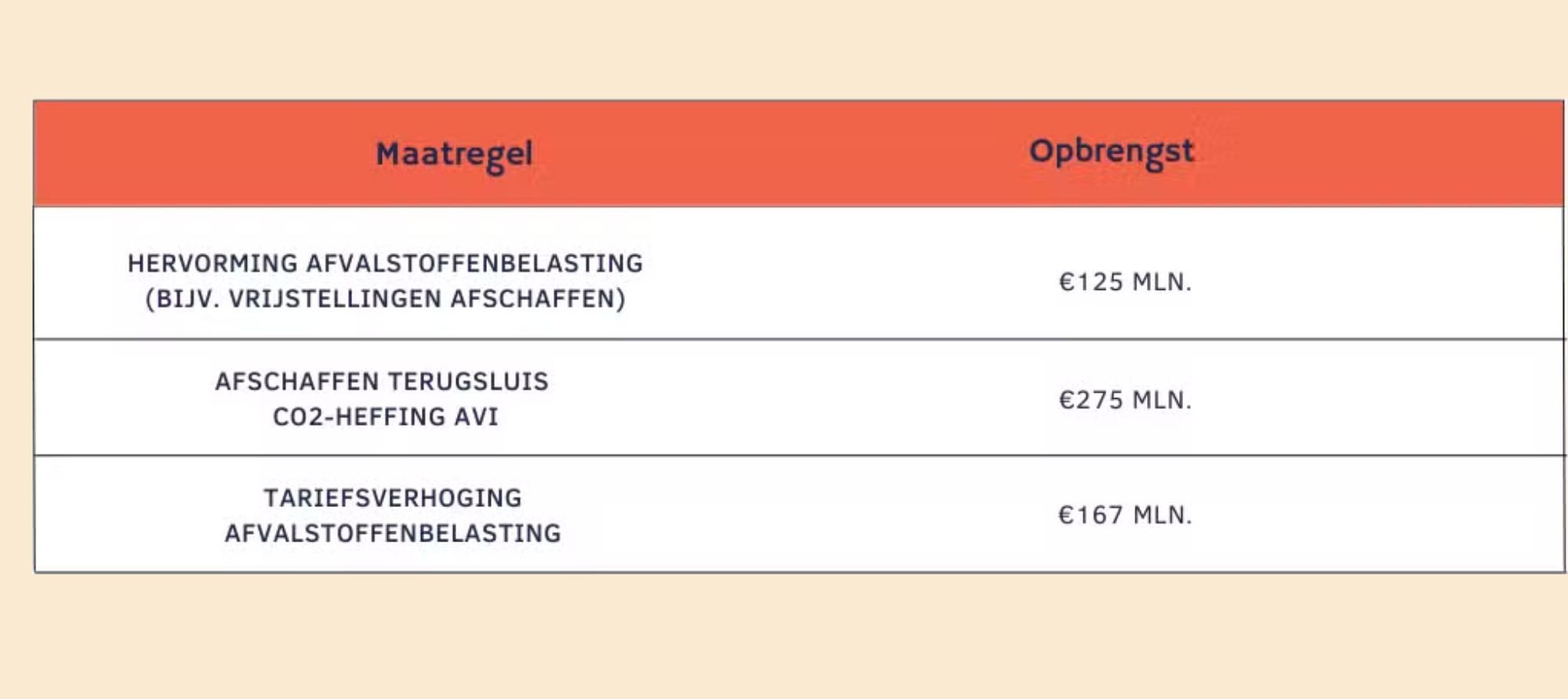
Table 1: Revenue coverage without plastic tax
State Secretary for Public Transport and the Environment, Jansen at the time, asked the Plastic Table to come up with solutions and alternatives. The participants were 1 multinational, 7 branch organisations, 4 from the government, 2 business organisations, and 2 civil society organisations. Public interest was underrepresented, a flaw in environmental policy that we see more often. It is therefore no surprise that the agreement is mainly about the voluntary commitment of the business sector and the demand for subsidies. However, among these was also one truly interesting measure, namely the 'circular leverage'. We will take you through some of the proposed actions and measures:
Voluntary increase of circular plastic
Several packaging companies commit to using a higher share of circular plastics in packaging than legally required. This adds up to 115 kton of plastic recyclate and 265 kton of CO2 reduction from 2026 in the Netherlands or the EU. This amount may increase further in the years after 2026. To properly understand this commitment, it is useful to look at the quantity of plastic packaging placed on the market in the Netherlands annually. According to the latest annual report from Verpact, this is around 534 kton. According to the report by the PBL, plastic packaging in the Netherlands consists of only about 7% recycled material, so a simple calculation shows that this concerns 37 kton on an annual basis. Looked at this way, the commitment of 115 kton seems to be a significant increase.
But the packaging manufacturers explicitly speak about NL/EU and thus not specifically about the Netherlands. Many companies naturally operate internationally, but this means that it is unclear what the extra effort in the Netherlands will be. It is therefore also unclear how much of the projected 265 kton of CO2 reduction counts towards Dutch targets.
A second point is that packaging companies are obliged to comply with the European Packaging Regulation by 2030. This European law prescribes that by 2030 plastic packaging must be made of 10 to 35% recycled material, depending on the plastic type and application. Companies must take quick steps to comply anyway, so to what extent is this 'extra' commitment just a hollow promise?
Without a link to a CO2 reduction target, the plastic industry has no limit on putting fossil plastic on the market. Finally, the packaging industry also does not have a good track record when it comes to voluntary commitments, see also the dissolved Plastic Pact.
Tariff differentiation
The Plastic Table also makes a proposal for a tightening of tariff differentiation for plastic packaging. The current tariff differentiation, part of the Extended Producer Responsibility (EPR) for packaging, offers a discount when using a certain percentage of recyclate and for better recyclability.
In the proposal, the discount increases when more recyclate is used and recyclability is higher. For bio-based plastics, financial support possibilities are assessed on a case-by-case basis. This should stimulate companies to use more recyclate and should reward frontrunners. The elaboration of the proposal lies with the EPR organisation Verpact, and the question remains how high they will let the tariff discount run. It is not clear whether the price difference with virgin plastic is compensated.
Circular leverage
The most interesting proposal in the final report concerns the circular leverage. The idea is that there is a levy on the share of fossil plastic in a product and that the revenues from this are used to support the circular economy. The upcoming Digital Product Passport (DPP) for textiles, building materials, furniture, electrical appliances, and mattresses must be the hook to arrange this. Through the DPP, producers provide information about the product, and the idea is that based on this information, a levy can be introduced. Possibly, the DPP can also be used to apply a levy to poorly recyclable products, such as with textiles when it consists of different types of fibres.
This levy then relates to products placed on the market and not to products or raw materials produced in the Netherlands, as was the case with the plastic tax. Furthermore, this is not a measure to boost the budget; after all, the revenues are spent on the circular economy.
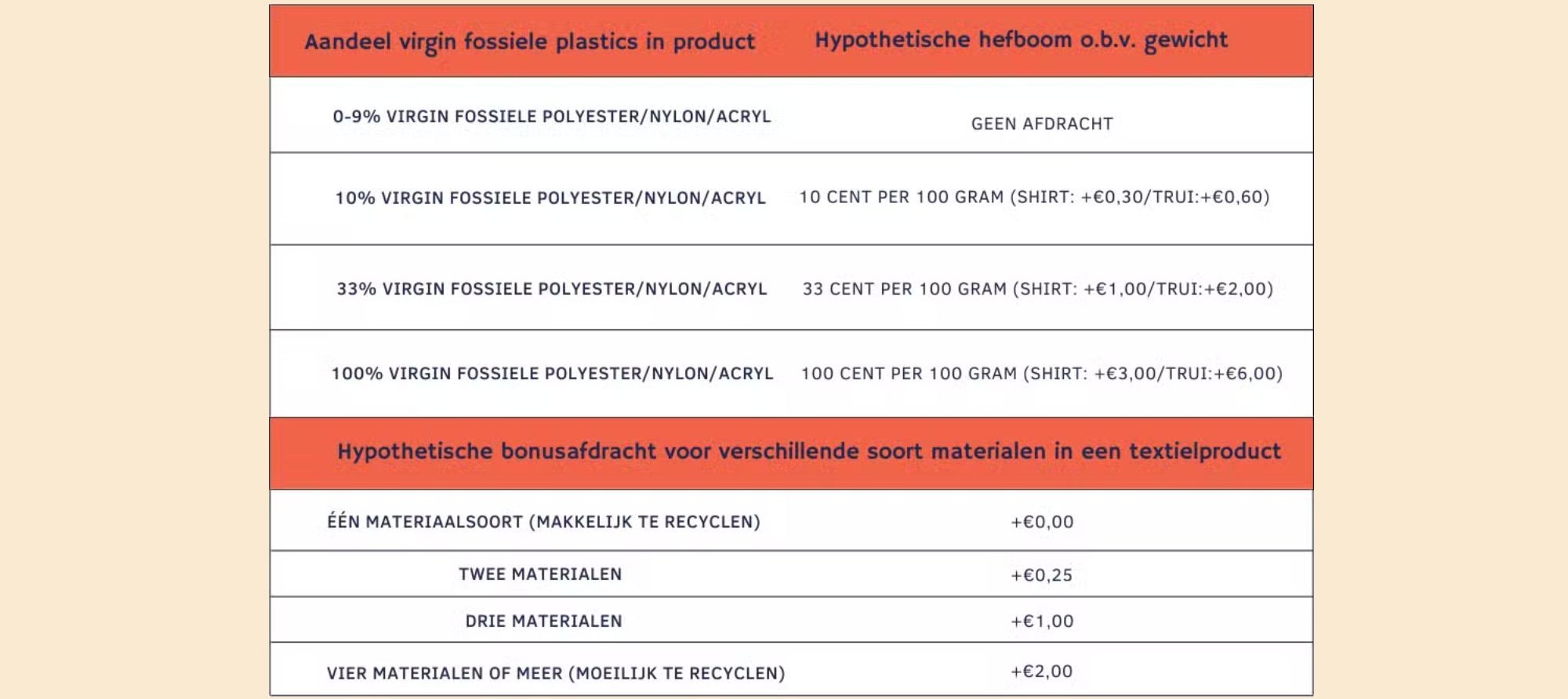
Table 2: Example of circular leverage on textiles (amounts are illustrative)
We are enthusiastic about the idea of the circular leverage. Because it taxes fossil raw materials in products entering the market, there is a level playing field: the obligation applies to Dutch and foreign producers. That it also frees up money for the circular economy is crucial. From the government's side, there is a large discrepancy between the goals and the available resources; these amount to only 86 million euros in 2025 and will decrease further to 54 million euros in 2030, according to the budget presented on Budget Day. An instrument like the circular leverage helps to bridge that gap partially.
But there are also several notes of caution to be made regarding the proposal.
First of all, it depends on the introduction of the Digital Product Passport for different product groups and thus also on the timeline and decisiveness at the European level. The DPP must apply in 2027 for textiles and building materials, in 2028 for furniture and electronics (where the precise scope is still unclear), and in 2029 for mattresses. At least if all goes well and the cold winter of deregulation currently plaguing Europe does not gain any further ground. The circular leverage therefore also requires the Netherlands to champion rapid implementation of the DPP in Europe. The State Secretary urges accelerated introduction of the DPP in his response to the European Circular Economy Act.
A second point is that it has not yet been established that fossil raw materials must be reported within the DPP. The share of recycled material should be part of the DPP, but you cannot simply deduce from that what the fossil share would be.
A third point concerns the scope and effectiveness of the instrument to steer the market. Much textile production takes place outside the Netherlands, often in Asia. This means that a t-shirt or a sweater with fossil polyester from China becomes more expensive, and that is good. But it does not change the situation that Dutch recyclers will still have trouble finding sales outlets; they will not easily sell their recyclate in China. For packaging, there is much more production in the Netherlands itself, but this large product group has been kept out of the levy.
Note that packaging accounts for 32% of plastic consumption in the Netherlands. The Plastic Table argues here that there is a functioning EPR system, but that EPR system has so far only led to the use of 7% recycled material in packaging. The sector is currently still thoroughly fossil-oriented, and it is precisely within this sector that Dutch recyclers could easily sell their material.
A fourth point is that everything depends on the level of the levy. Fossil plastic must be made so unattractive that it stimulates prevention and substitution policies. Understandably, no agreement was reached at the Plastic Table on the level of the levy. That must also be looked at carefully, and this did not go hand in hand with the short time in which the Plastic Table had to deliver the report. In our view, the calculation example shown in Table 2 must give an indication to make the price difference with more sustainable materials large enough.
Finally, the DPP is a reliable information carrier, but it is up to the Netherlands itself to shape the circular leverage in a good way: both collectingandspending the levy. According to the Ministry of Finance, the tax authorities are already overstretched and there is no room for further implementation of new product-oriented measures. It is important that a clear mandate comes from the new government very quickly and that capacity is provided to set up this structure. The signals from various political parties steering towards deregulation and a smaller government are worrying in that respect.
Other instruments
With regard to packaging, some proposals are made whose effectiveness is harder to assess. Verpact's "Circular Plastic Bank" proposes setting up its own administration and 'actively' bringing together supply and demand of circular plastics. It remains to be seen what problem this actually solves. Facilitating supply and demand does not solve the problem of unequal competition, nor does it reduce the demand for new plastic.
The Plastic Table further proposes to look for opportunities with regard to government procurement to increase the market for recyclate, also with regional governments. In various parts of government procurement, opportunities are actively being sought, for example in the workplace environment category.
Wishes or conditions?
The Plastic Table lays a substantial number of wishes on the government's plate. This immediately begs the question of howvoluntarythe voluntary commitment is, or how conditional. Besides the fact that no one in the plastic production chain wants to share in the pain of the €567 million tax burden increase, which by decision of Sophie Hermans (VVD) now lies solely with the waste sector, a number of subsidies or cost reductions are requested.

Table 3: Requested support Plastic Table
A part of the requested subsidies concerns support for recyclers. It is clear that the plastic recycling sector cannot compete well in the current economy and that must change. The most important thing is therefore that the government changes market conditions to generate a solid business case: fossil plastic must become more expensive and recyclate must be mandatorily applied. Support alone is unwise.
Process
The plastic industry indicates it does not want to bear the entire €567 million, and comes up with no more than 115 kton as a voluntary commitment. An outcome that is disappointing, but not unexpected given the setup of the table. The balance between interest groups for industry and entrepreneurs and advocacy groups for nature and the environment was not equal, which caused public interest to recede into the background.
Conclusion
This can be done better. The government should not have simply handed over policy. In response to the plastic industry's lobby, the plastic standard and tax were discarded without a proper plan on 'where to go from here'. Consultation with chain partners and societal actors is an important part of policymaking, but the government must take control, especially in difficult transitions. Although many parties at the Plastic Table have worked hard for a good result, the outcome is riddled with uncertainties and it is unclear what significance the voluntary initiatives have.
The circular leverage is the most meaningful proposal made by the Plastic Table, and the eventual success of the table therefore depends on how this is taken forward in the coming period. The first hesitant reaction from State Secretary Thierry Aartsen during the committee debate on 11 September promised little. The State Secretary did not want to commit to securing the leverage. A false start.
This page is automatically translated. A human review will follow soon.