Pleased with State Secretary's investigation into ban on plastic cigarette filters
“With such an investigation, the Dutch government places itself among the frontrunners in the fight against plastic pollution from cigarette butts. We are very pleased that the State Secretary is already responding to our request for research,” responds campaign leader Karl Beerenfenger of the Plastic Peuken Collectief: “Plastic cigarette butt pollution is everywhere. From beaches to cities, and from car parks to […]”

“With such an investigation, the Dutch government is positioning itself among the frontrunners in the fight against plastic pollution from cigarette butts. We are very pleased that the State Secretary is already responding to our request for an investigation,” reacts campaign leader Karl Beerenfenger of the Plastic Peuken Collectief: “Plastic cigarette butt pollution is everywhere. From beaches to cities, and from car parks to schools and playgrounds. A ban on the plastic cigarette filter is therefore a necessary step in combating plastic pollution. We are already asking that the government eventually writes both the goal of 70% fewer cigarette butts in the environment by the end of 2026 and the ban on plastic filters into law,” says Beerenfenger. MP Van Esch of the Party for the Animals submitted a motion in February during a two-minute debate in the House of Representatives about a ban on the plastic cigarette filter. In addition, MP Bouchallikh of GroenLinks submitted a motion for a legal target of 70% fewer cigarette butts in the environment by the end of 2026. The latter motion was adopted by the House of Representatives. State Secretary Heijnen's investigation includes both the feasibility of a 70% reduction target and a ban on plastic filters. She expects the study to be ready by the end of this year. In 2021, nearly 10 billion cigarettes were sold in the Netherlands. Of these, an estimated two-thirds end up on the ground or in the water. Cigarette filters are made of cellulose acetate, a type of plastic. Cigarette butts therefore do not decompose in the environment. The Plastic Peuken Collectief therefore repeatedly called on the State Secretary to ban the plastic cigarette filter as soon as possible. Karl Beerenfenger: “The tobacco industry likes to place the responsibility on the smoker themselves. But awareness alone will never end pollution. And cleaning up everything is an impossible and unaffordable task. We therefore think it is incredibly good that the State Secretary is following up on the House of Representatives motion. The fact that the research is being carried out indicates that a ban on plastic filters is a realistic option,” says Beerenfenger. The ministry is looking into the legal and technical feasibility of a ban. Beerenfenger: “Within the European Union, product bans in a member state cannot simply be implemented. There must be sufficient reason for this from a health or environmental perspective, for example. In this case, there is plenty to be said for both sides. The plastic cigarette filter is both the largest form of plastic pollution and offers no health benefits compared to smoking without a filter. That is scientifically proven, although the tobacco industry still wants us to believe otherwise. The filter only offers a false sense of security and is merely a marketing tool to sell more cigarettes.” Cleanup costs From next year, tobacco producers in the EU member states must pay for the cleanup costs of cigarettes with plastic filters. This is established under the heading of Extended Producer Responsibility in Article 8 of the European Single Use Plastics Directive (SUPD), which came into force last summer. The measure will be evaluated in 2026. To determine the costs to be passed on, Rijkswaterstaat is charged with a monitoring and cost study this year. The GroenLinks motion also requests the House of Representatives to better monitor the scale and cleanup costs of cigarette filters in litter. Rob Buurman, director of environmental organisation Recycling Netwerk Benelux, says: “Pending a ban, we have called on the Dutch government to closely monitor the number of littered cigarette butts and to set realistic cleanup costs per butt. This way, the government can motivate tobacco producers to prevent cigarette butts from ending up in the environment. The State Secretary also addresses this in her letter to the House of Representatives. “Rijkswaterstaat will take this part of the motion into account when setting up the system for the cost and composition study for the benefit of Extended Producer Responsibility,” she writes. It is proven time and again that cigarette filters often end up in the environment. During the annual World Cleanup Day of the Plastic Soup Foundation, cigarette filters are consistently the most commonly found item. Bentelise Kraaijeveld of the Plastic Soup Foundation: “In recent years, cigarette filters have consistently been number one on the list of most commonly found items during World Cleanup Day. It is important that this huge source of plastic pollution is quickly brought to an end. We are therefore pleased to hear that serious steps are being taken towards a ban.” During the Beach Cleanup Tour organised by the North Sea Foundation for the eighth time last summer, 57,772 cigarette filters were cleared from the beach in fifteen days.
“With such an investigation, the Dutch government is positioning itself among the frontrunners in the fight against plastic pollution from cigarette butts. We are very pleased that the State Secretary is already responding to our request for an investigation,” reacts campaign leader Karl Beerenfenger of the Plastic Peuken Collectief: “Plastic cigarette butt pollution is everywhere. From beaches to cities, and from car parks to schools and playgrounds. A ban on the plastic cigarette filter is therefore a necessary step in combating plastic pollution. We are already asking that the government eventually writes both the goal of 70% fewer cigarette butts in the environment by the end of 2026 and the ban on plastic filters into law,” says Beerenfenger.
MP Van Esch of the Party for the Animals submitted a motion in February during a two-minute debate in the House of Representatives about a ban on the plastic cigarette filter. In addition, MP Bouchallikh of GroenLinks submitted a motion for a legal target of 70% fewer cigarette butts in the environment by the end of 2026. The latter motion was adopted by the House of Representatives. State Secretary Heijnen's investigation includes both the feasibility of a 70% reduction target and a ban on plastic filters. She expects the study to be ready by the end of this year.
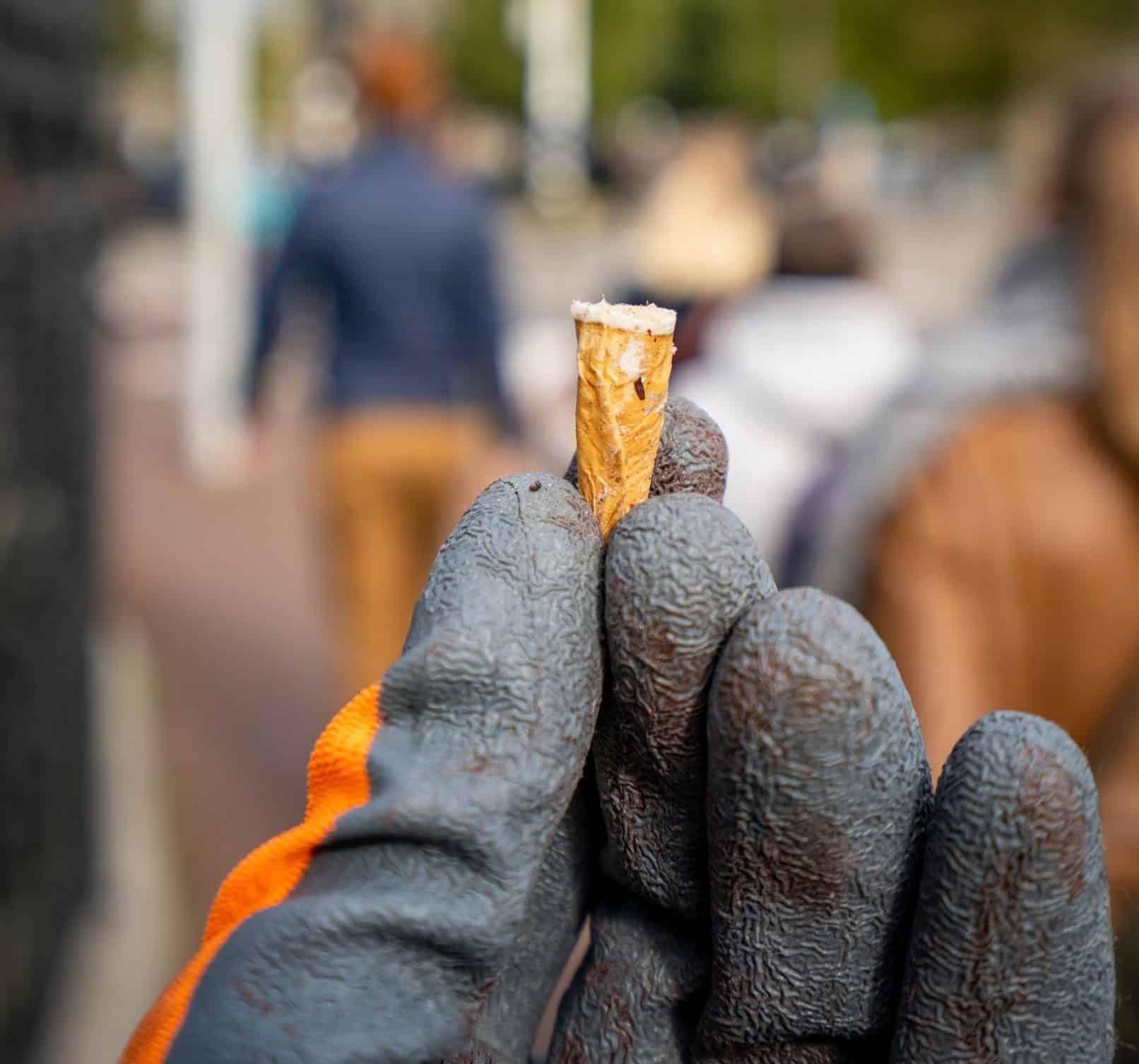
In 2021, nearly 10 billion cigarettes were sold in the Netherlands. Of these, an estimated two-thirds end up on the ground or in the water. Cigarette filters are made of cellulose acetate, a type of plastic. Cigarette butts therefore do not decompose in the environment. The Plastic Peuken Collectief therefore repeatedly called on the State Secretary to ban the plastic cigarette filter as soon as possible.
Karl Beerenfenger: “The tobacco industry likes to place the responsibility on the smoker themselves. But awareness alone will never end pollution. And cleaning up everything is an impossible and unaffordable task. We therefore think it is incredibly good that the State Secretary is following up on the House of Representatives motion. The fact that the research is being carried out indicates that a ban on plastic filters is a realistic option,” says Beerenfenger.
The ministry is looking into the legal and technical feasibility of a ban. Beerenfenger: “Within the European Union, product bans in a member state cannot simply be implemented. There must be sufficient reason for this from a health or environmental perspective, for example. In this case, there is plenty to be said for both sides. The plastic cigarette filter is both the largest form of plastic pollution and offers no health benefits compared to smoking without a filter. That is scientifically proven, although the tobacco industry still wants us to believe otherwise. The filter only offers a false sense of security and is merely a marketing tool to sell more cigarettes.”
Cleanup costs
From next year, tobacco producers in the EU member states must pay for the cleanup costs of cigarettes with plastic filters. This is established under the heading of Extended Producer Responsibility in Article 8 of the European Single Use Plastics Directive (SUPD) which came into force last summer. The measure will be evaluated in 2026. To determine the costs to be passed on, Rijkswaterstaat is charged with a monitoring and cost study this year. The GroenLinks motion also requests the House of Representatives to better monitor the scale and cleanup costs of cigarette filters in litter.
Rob Buurman, director of environmental organisation Recycling Netwerk Benelux, says: “Pending a ban, we have called on the Dutch government to closely monitor the number of littered cigarette butts and to set realistic cleanup costs per butt. This way, the government can motivate tobacco producers to prevent cigarette butts from ending up in the environment. The State Secretary also addresses this in her letter to the House of Representatives. “Rijkswaterstaat will take this part of the motion into account when setting up the system for the cost and composition study for the benefit of Extended Producer Responsibility,” she writes.
It is proven time and again that cigarette filters often end up in the environment. During the annual World Cleanup Day of the Plastic Soup Foundation, cigarette filters are consistently the most commonly found item. Bentelise Kraaijeveld of the Plastic Soup Foundation: “In recent years, cigarette filters have consistently been number one on the list of most commonly found items during World Cleanup Day. It is important that this huge source of plastic pollution is quickly brought to an end. We are therefore pleased to hear that serious steps are being taken towards a ban.”
During the Beach Cleanup Tour organised by the North Sea Foundation for the eighth time last summer, 57,772 cigarette filters were cleared from the beach in fifteen days.
This page is automatically translated. A human review will follow soon.