Get rid of fast fashion
We are buying more and more clothes, wearing each garment less and less often, an increasing proportion of our clothing is made of plastic, and we are throwing away more and more. The rise of fast fashion is a disaster for our planet, a tragedy for many workers in the industry, and a growing risk to our health. FRF fights against these throwaway clothes and for real responsibility in the clothing industry.

The environmental impact of textiles
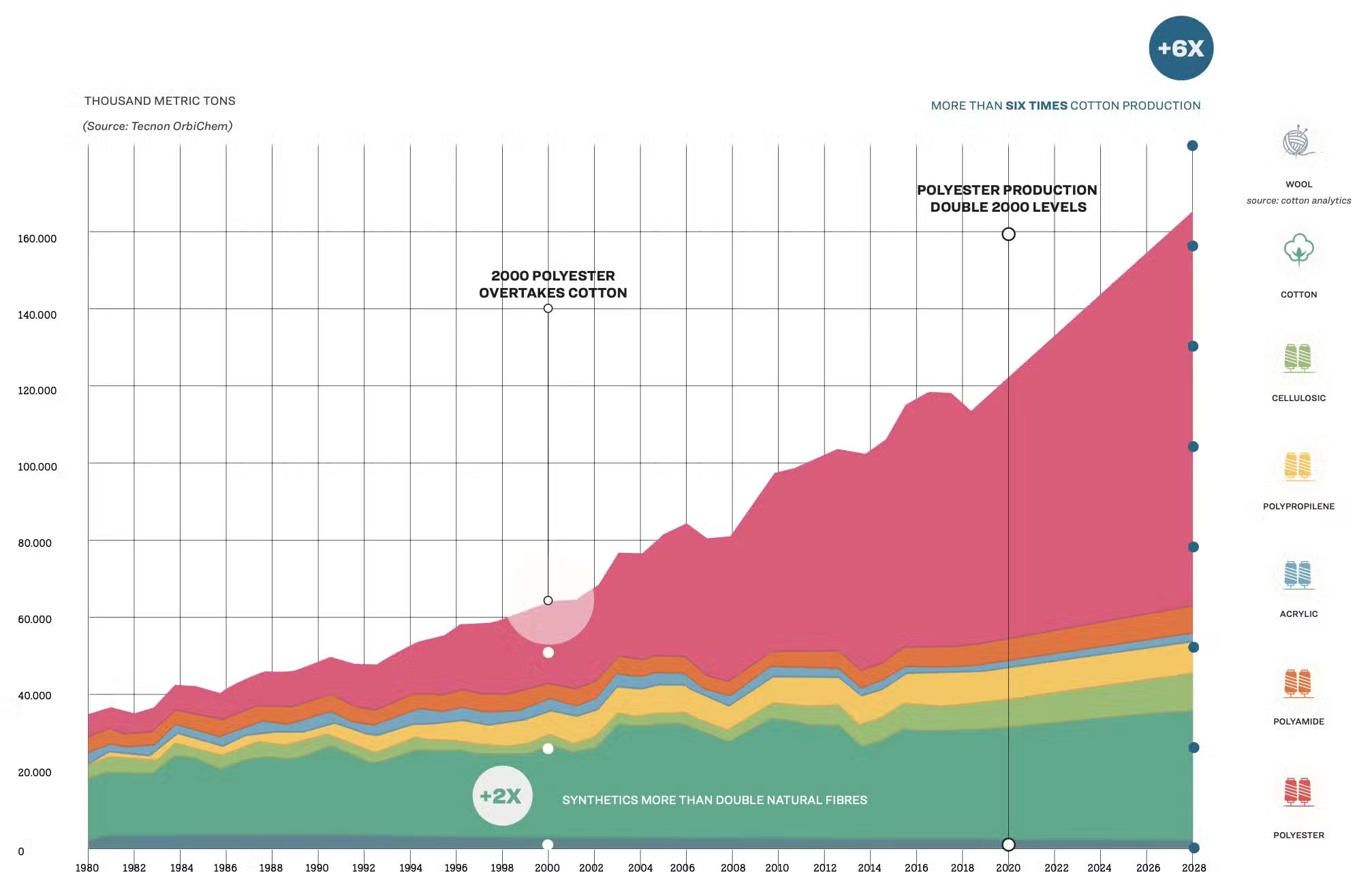
The amount of clothing we consume in Europe has gone up by 40% in recent decades, while the quality has rapidly declined due to the increasing use of synthetic fabrics. To produce these fabrics, non-renewable raw materials such as oil and gas are required. Currently, the textile industry uses around 1.35% of global oil consumption. This might not seem like much, but it is more than the entire annual oil consumption of a country like Spain. Other fabrics, such as cotton, are also (though depending on the production method) still very damaging to the planet; for instance, the production of cotton requires a lot of land area and water – around 2500 litres for one shirt.
Textile policy
Policy for textile products is shaped in various ways. For example, there are policies aimed at producer responsibility, sustainability requirements for textile products, green claims, and export regulations. Some aspects are regulated at European level, while member states can also develop and introduce policies themselves. For instance, in the Netherlands, producer responsibility for textiles has already been introduced, ahead of the European obligation. Textile policy covers not only environmental issues, but also social aspects, such as working conditions and human rights throughout the production chain.
Overproduction and consumption
The textile industry distinguishes itself from other product groups in that supply drives the demand for textiles. Fair Resource Foundation therefore focuses on tackling the damaging production levels of textiles. In doing so, we look at alternative ways of producing and consuming: reducing excessive consumption, promoting long-term use of clothing, and encouraging alternative models such as sharing, swapping and leasing. We strive for a balance between meeting human needs and respecting the boundaries of the environment, to promote a more just and sustainable textile industry.
Producer responsibility for textiles
From July 2023, extended producer responsibility (EPR) applies to textiles in the Netherlands. We have frequently noted (such as here and here) that a number of things go wrong within EPR systems, much of which can be traced back to poor governance. The role of the government is too limited, many stakeholders feel sidelined, and enforcement is lacking. A lack of transparency – in the area of claims, but also in terms of production volumes and material use – combined with the pursuit of maximum profit, hinders the transition to a sustainable textile industry.
Sustainability must, among other things, be measured by the extent to which virgin raw materials are avoided. A garment that is not produced, and therefore not bought by the consumer, is ultimately the most sustainable solution. To bring about the necessary change, Fair Resource Foundation founded the producer organisation Collectief Circulair Textiel in 2024.